

Goa has one of the most distinctive food cultures in India, shaped over five centuries by Portuguese colonisation, Catholic traditions, Hindu culinary heritage and the simple abundance of the Arabian Sea. The result is a cuisine unlike anything else on the subcontinent: deeply spiced but not always chilli-hot, rich with coconut and tamarind, and built around some of the freshest seafood in the country.
In April and May, the fishing season is still active before the monsoon-enforced ban that begins in June. Kingfish, pomfret, prawns, crabs, mackerel, clams and mussels come in daily from the boats. Markets in Margao, Mapusa and Panaji fill before 8 AM with catches so fresh they still smell of the sea rather than the fishmonger. This is the time to eat seriously in Goa — and this guide tells you exactly what to order, and where.
The Dishes You Must Try
Fish Curry Rice — The Soul of Goan Cooking
If you eat only one thing in Goa, it must be fish curry rice. This is not tourist food — it is what Goans eat for lunch every single day, and the quality of a restaurant's fish curry is the truest measure of its kitchen. The base is a gravy of freshly grated coconut, dried Kashmiri chillies, tamarind, and spices ground on a stone — a process that takes time and cannot be faked. The fish is most commonly kingfish (viswan), though pomfret and mackerel are equally traditional. The curry is tangy, coconut-forward and moderately spiced, served alongside steamed white rice and a slice of raw mango or lime.
The version you want is made fresh, served at lunch, and eaten with your hands. Any place offering it at dinner from a pre-made pot is telling you something.
Order it at: Local lunch homes (khanavals) in Panaji's old quarters, Margao market area, or any family-run restaurant away from the beach strips.

Prawn Balchão — Fire in a Bottle
Balchão is Goa's most Portuguese-influenced preparation and its most assertively flavoured. Whole prawns are cooked in a thick, deeply spiced pickle masala of vinegar, dried shrimp paste, garlic, ginger and a blend of chillies that builds heat slowly and memorably. It is traditionally served as a side dish alongside rice and dal, not as a main. The flavour is intense, complex and slightly sour — nothing else in Indian cuisine quite resembles it. Pork balchão is equally revered but for seafood lovers, the prawn version is the one.
Order it at: Ritz Classic in Panaji (a Goan institution since the 1930s), Venite Restaurant in Fontainhas, or any Catholic-run home restaurant in Old Goa.
Pomfret Recheado — The Stuffed Masterpiece
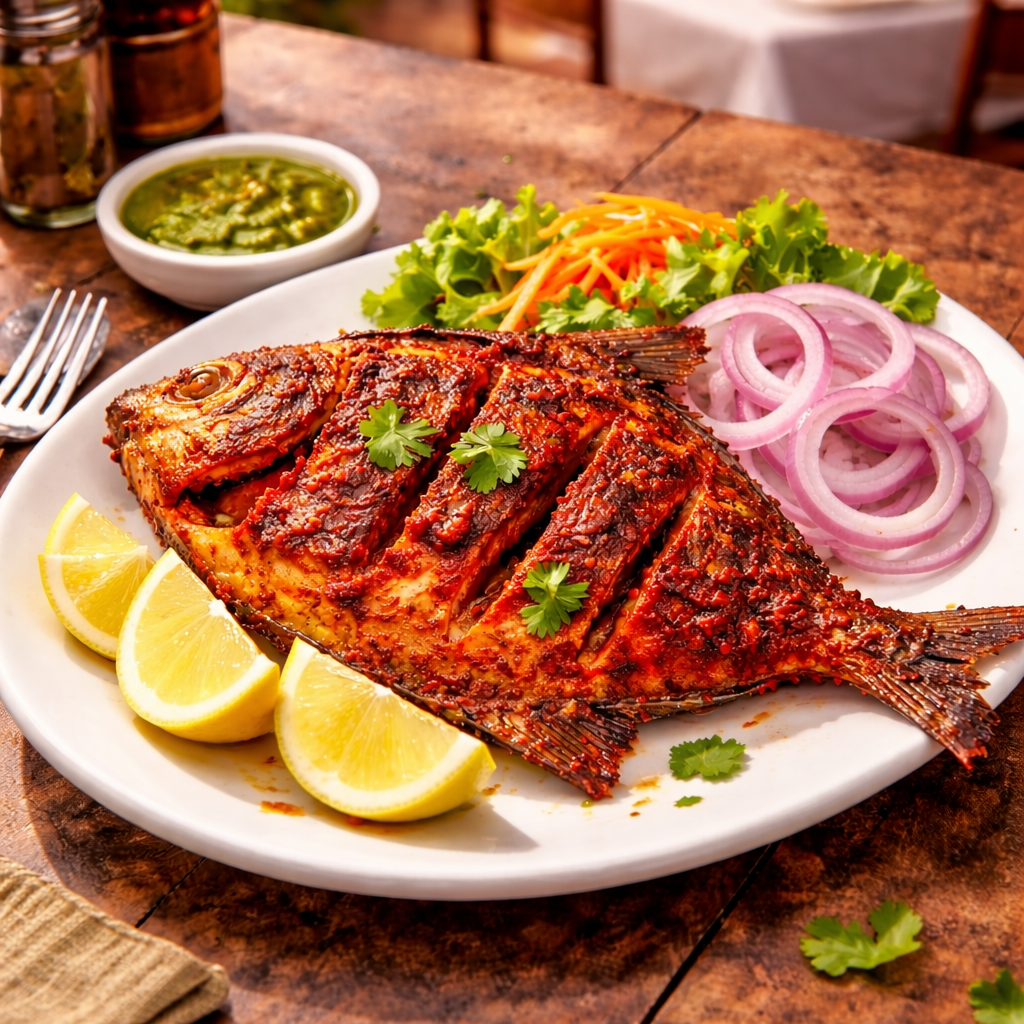
Recheado (from the Portuguese rechear, to stuff) is a scarlet masala of Kashmiri chillies, garlic, ginger, cumin, cloves, cinnamon and palm vinegar, applied generously inside a scored whole fish — usually pomfret or mackerel — before it is pan-fried until the exterior caramelises and the inside stays moist and deeply flavoured. The masala paste itself is sold in every Goan market and is one of the best edible souvenirs to take home.
Order it at: Beach shacks with fresh pomfret on the daily board; ask if the recheado is made in-house. At Brittos in Baga, the recheado pomfret has been on the menu for decades for good reason.
Crab Xec Xec — The Weekend Reward
Pronounced shek shek, this is a dry-style crab preparation with a freshly roasted coconut and spice masala that coats the crab pieces in a fragrant, slightly nutty crust. It is slow food — crabs are cooked whole and the eating requires patience, a nutcracker and fingers — but the reward is exceptional. It appears mainly as a weekend special and in restaurants that buy their crabs live. Don't rush it.
Order it at: Fisherman's Wharf in South Goa (Cavelossim), Martin's Corner in Betalbatim, or ask any Goan grandmother if she'll make it for you — results will vary but the ceiling is extraordinarily high.

Sol Kadi — The Essential Drink-Dish
Technically a drink, sol kadi functions as a palate cleanser, digestive aid and side dish simultaneously. Made from kokum (a small sour fruit native to the Konkan coast) steeped in fresh coconut milk with garlic and green chilli, it is served cold and pale pink. It counteracts the heat of spicier dishes beautifully and is one of the most refreshing things you can consume in Goa's April heat. Order it automatically with any major seafood meal.
Find it: Everywhere good food is served. If a restaurant doesn't offer sol kadi, recalibrate your expectations of the rest of the menu.

Clams Tisreo — The Market Discovery
Clams cooked in a simple masala of onion, garlic, green chilli, fresh coconut and a pinch of turmeric — tisreo is home cooking at its most honest. You'll rarely find it on tourist menus but it appears frequently in local lunch homes and neighbourhood restaurants. The clams are small, sweet and intensely briny; the masala is light enough not to overwhelm them. In April, when the more famous crab and prawn dishes attract attention, tisreo is the quiet champion of the Goan table.
Shacks vs Restaurants vs Lunch Homes: What's the Difference?
Understanding where to eat is as important as knowing what to order.
Beach shacks are the most visible option — open-sided structures directly on or near the beach, serving everything from wood-fire pizza to fresh grilled fish. Quality varies enormously. The best shacks buy daily from local fishermen and will tell you what's fresh on a handwritten board. The worst use frozen fish and overprice aggressively. In April and May, the best shacks are still operating in South Goa (Agonda, Palolem, Patnem) while North Goa thins out slightly. A whole grilled pomfret at a good shack, rubbed with recheado masala and served with rice and salad, is one of Goa's finest meals at around ₹450–650.
Restaurants in Goa range from celebrated institutions like Venite in Fontainhas and Mum's Kitchen in Panaji (which specialises in traditional Goan recipes recovered from old family collections) to mid-range spots serving reliable thalis. These are the places for longer lunches, a proper Goan feast, or when you want to try xec xec or sorpotel (a tangy pork offal preparation that also works brilliantly with seafood) in a comfortable setting.
Lunch homes (khanavals) are the hidden backbone of Goan food culture. Family-run, often in private homes or small neighbourhood spaces, open only for lunch and sometimes dinner, serving a fixed daily menu of whatever was cooked that morning. No menus, minimal English, no concessions to tourism — and consistently the best, most authentic and cheapest food in Goa. A full lunch of fish curry rice, vegetable, pickle and papad runs ₹120–180. Finding them requires asking locals or your rental host; they are almost never on Google Maps.

The April–May Seafood Advantage
In summer, you eat what's actually in season rather than what's been frozen for tourists. April is excellent for kingfish, pomfret, mackerel, squid and tiger prawns. The Margao fish market (open from 6 AM, best by 8 AM) is worth a visit even if you're not cooking — the scale and variety of the morning catch is one of Goa's most vivid experiences. If you're staying in a villa with a kitchen, buying directly from the market and cooking your own Goan seafood breakfast is one of the great pleasures of a summer trip.
Several rental stays and homestays in our listings also offer a cooking class experience as part of the stay — ask when booking.
Quick Reference: What to Order Where
- Best fish curry rice: Ritz Classic (Panaji), local lunch homes near Margao market
- Best recheado pomfret: Brittos (Baga), Fisherman's Wharf (Cavelossim)
- Best prawn balchão: Venite Restaurant (Fontainhas, Panaji), Mum's Kitchen (Panaji)
- Best crab xec xec: Martin's Corner (Betalbatim), Fisherman's Wharf (Cavelossim)
- Best budget seafood: Any lunch home in the Margao or Panaji old quarter
- Best shack for grilled fish: Ask your rental host — the best ones change seasonally and locals always know
Goa's seafood culture is not a restaurant performance. It is a living daily practice that has been refined over centuries of coastal life. Eat where locals eat, order what's fresh that morning, and take your time. The susegad philosophy applies as much to the table as it does to the beach.
Browse our short-term rental listings — several properties include kitchen access, market proximity or a cooking class experience built into the stay. The best meal of your Goa trip might be the one you cook yourself.
CALL TO ACTION
read our previous blogs to know Goa better
Why April–Mayis the best kept secret for visiting Goa
10 Uncrowded Beaches in Goa to Discover This April & May


