
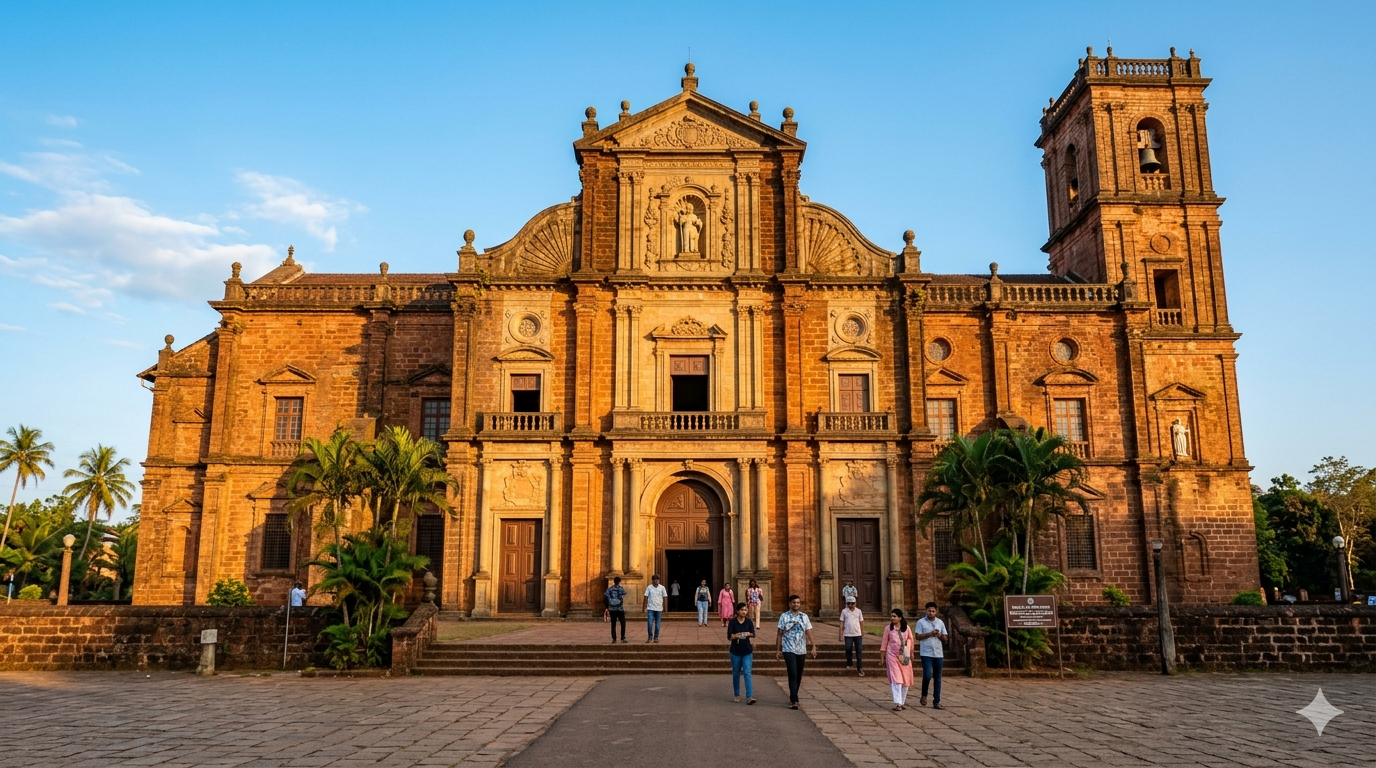
In the sixteenth century, Old Goa was one of the most powerful cities in the world. Known as the "Rome of the East," it was the administrative and religious capital of the Portuguese Empire in Asia — a city of grand churches, palaces, monasteries and a population that rivalled Lisbon itself. Today, the city is largely reclaimed by forest and silence, but what remains standing is breathtaking: a cluster of churches and convents designated a UNESCO World Heritage Site in 1986, built from golden laterite stone and filled with extraordinary art, relics and history.
Most visitors pass through in an hour. This guide is for those who want to understand what they are looking at — and why it matters.
Before You Go: Essential Practicalities
The road into Old Goa is quiet and atmospheric in April — arrive before 9 AM and you may have the entire complex almost to yourself.
Getting there: Old Goa is 9 kilometres east of Panaji on the south bank of the Mandovi River. By scooter, it is a 20-minute ride from the city centre. By bus, frequent Kadamba services run from Panaji's main bus stand and stop directly at the church complex. Taxis and auto-rickshaws are straightforward.
When to go: April mornings are the ideal time to visit. Arrive between 7:30 and 9 AM. The light on the laterite stone is magnificent in the early hours, the heat is manageable, and the crowds — which can be significant on weekends even in summer — have not yet arrived. By 11 AM, particularly on weekends, tour groups begin to fill the main basilica.
Time needed: Allow three to four hours for the full walking tour. A rushed visit covers the main basilica and Se Cathedral in 45 minutes; a thorough one that includes the Museum of Christian Art, the Church of St Cajetan and the Archaeological Museum takes a full morning.
Entry: Most churches are free to enter. The Museum of Christian Art has a nominal entry fee. Dress modestly — shoulders and knees covered — as these are active places of worship.
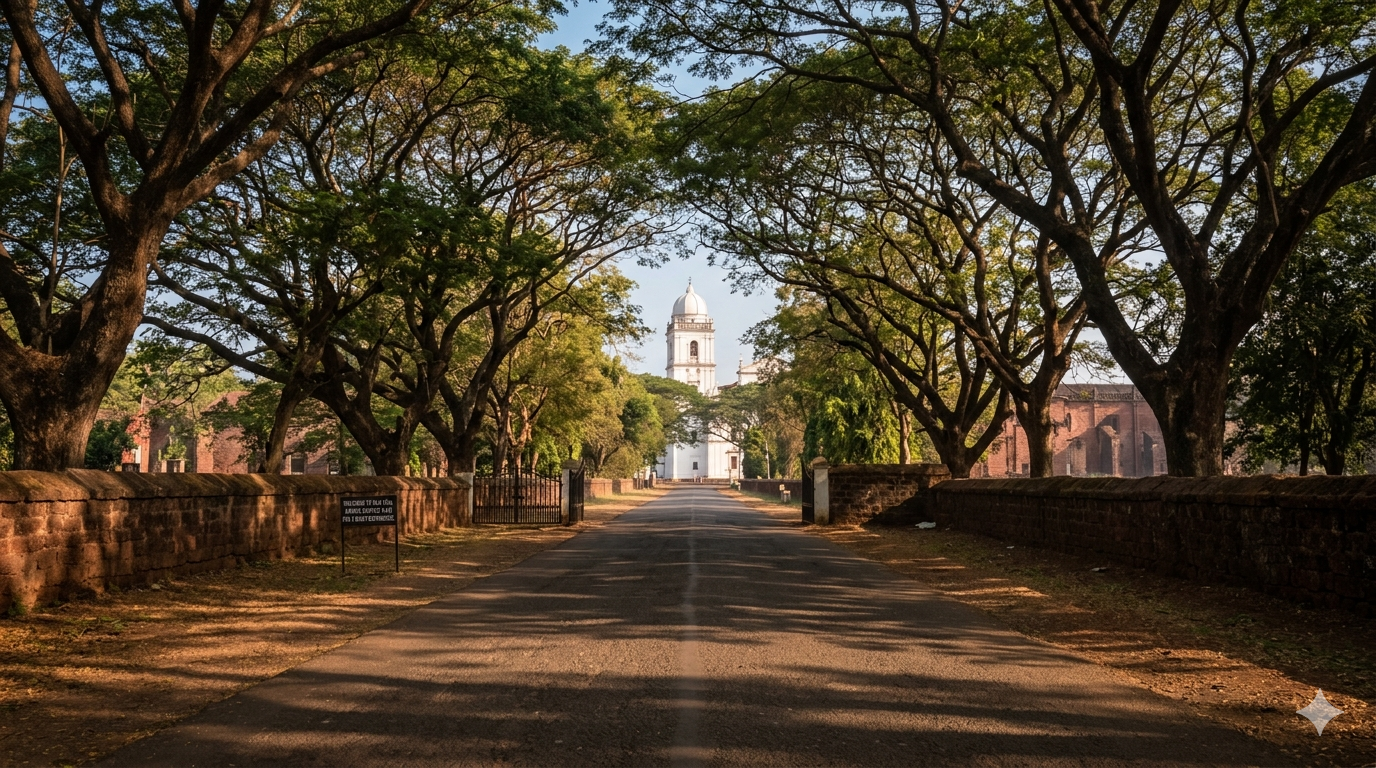
The Walking Route: Church by Church
Stop 1 — The Basilica of Bom Jesus (7:30 AM)
[IMAGE: Interior of Basilica of Bom Jesus, Goa — ornate gilded altar, Baroque carvings, warm amber light from high windows, empty nave in early morning] The interior of the Basilica of Bom Jesus is one of the finest Baroque interiors in Asia — arrive early and the silence inside is profound.
Begin at the Basilica of Bom Jesus, the centrepiece of Old Goa and one of the most significant Catholic churches in Asia. Built between 1594 and 1605, it is the oldest Baroque church in the subcontinent and the resting place of St Francis Xavier — the Jesuit missionary who played a central role in spreading Christianity across Asia in the sixteenth century.
The exterior is built from dark laterite stone, deliberately left unplastered unlike most of Old Goa's other churches, giving it a more severe and ancient character. Step inside and the contrast is immediate: a soaring nave, ornate gilded altar, and the elaborately carved Chapel of St Francis Xavier on the right side of the church, where the saint's silver casket sits on a raised platform. The casket is always present; the body within is exposed to public view only during the Exposition of St Francis Xavier, which takes place every ten years (the next is in 2034).
The Baroque art throughout the basilica — the altar, the side chapels, the carved wooden pulpit — rewards close attention. Spend at least thirty minutes here and look upward: the ceiling paintings and the quality of the gilded woodwork are extraordinary.
What to look for: The tomb of Dom Jerónimo Mascarenhas on the left wall, gifted by the Grand Duke of Tuscany, is one of the finest pieces of Florentine marble art in India. Most visitors walk past it without stopping.
Stop 2 — Se Cathedral (8:15 AM)
Se Cathedral is the largest church in Asia — its Golden Bell, still housed in the surviving tower, is renowned across the Catholic world for its tone.
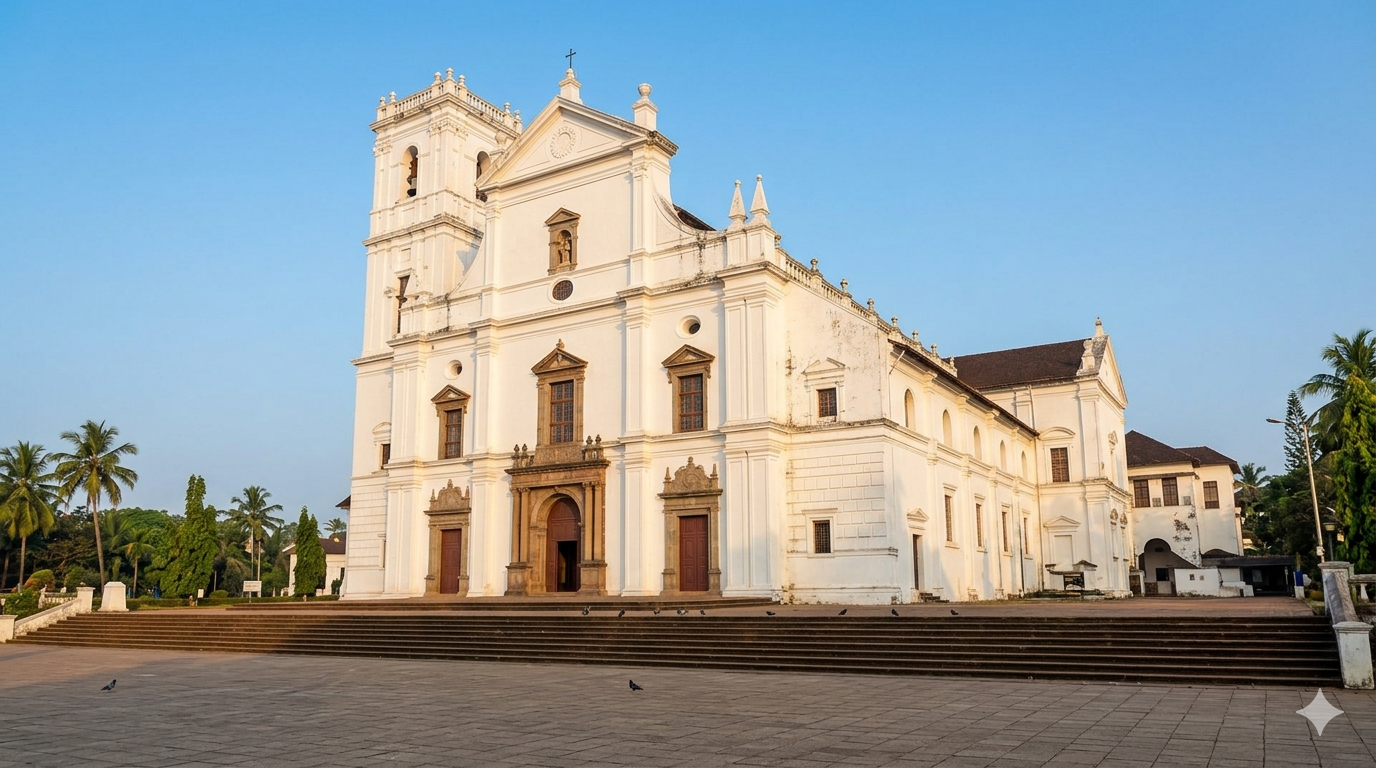
A short walk across the open green from the Basilica brings you to Se Cathedral — the largest church in Asia and the seat of the Archbishop of Goa and Daman. Its construction began in 1562 and was completed in 1619, built to commemorate the Portuguese victory over Muslim forces on the feast of St Catherine in 1510. The church is dedicated to St Catherine of Alexandria.
The exterior is immediately striking — a massive white Tuscan-Corinthian facade with a single surviving bell tower (the second collapsed in 1776). Inside, the scale is immense: a nave of 76 metres, fourteen side chapels, and an intricately carved main altar depicting scenes from St Catherine's life and martyrdom. The altar of the Blessed Sacrament on the right has some of the finest gilded woodwork in the complex.
The famous Golden Bell, housed in the surviving tower, can sometimes be heard on Sunday mornings. It is considered one of the finest-toned bells in the world and is known locally as the Sino de Ouro.
What to look for: The Chapel of the Cross of Miracles contains a cross said to have appeared miraculously on the site in 1619. The ornate screens separating the side chapels from the nave are among the best examples of Indo-Portuguese woodcarving in Goa.
Stop 3 — Church of St Francis of Assisi & Archaeological Museum (9:00 AM)
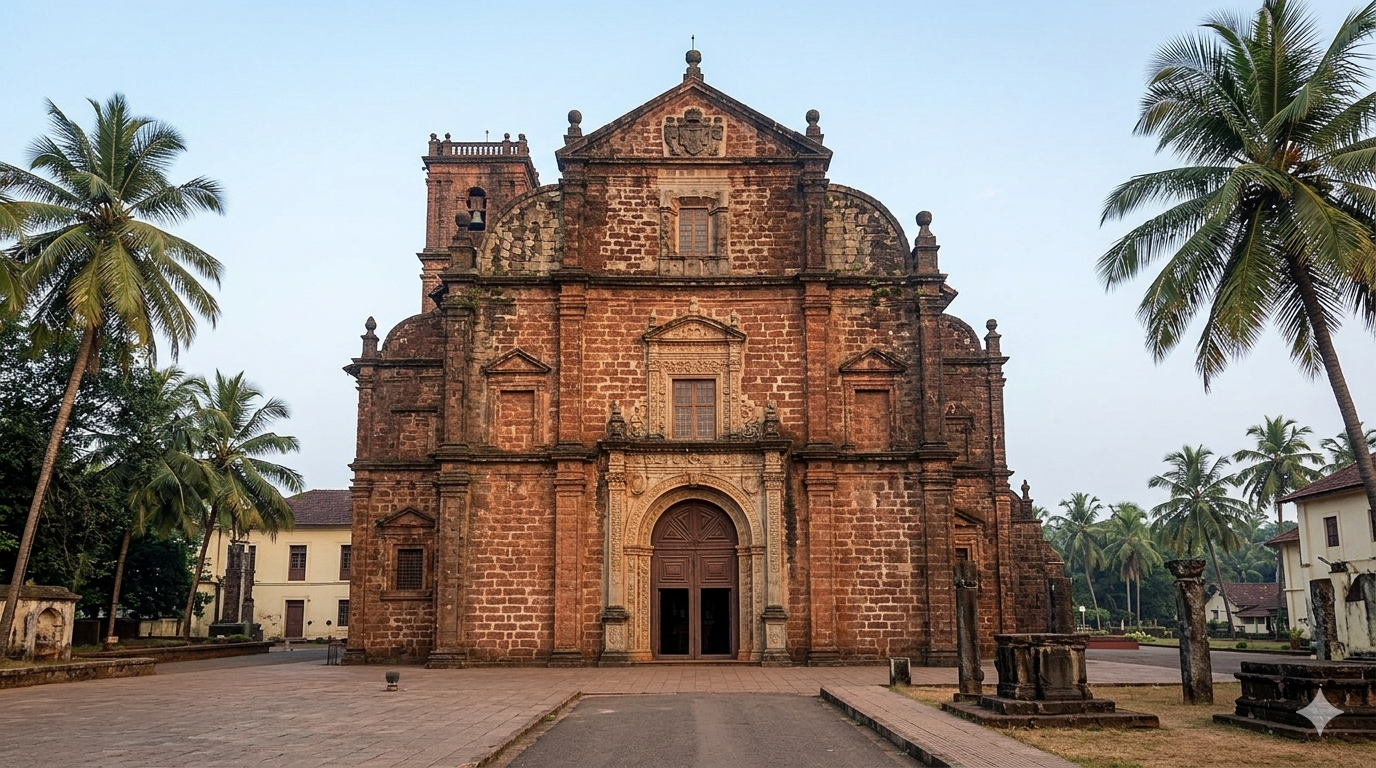
The doorway of St Francis of Assisi is one of the finest examples of Manueline Gothic architecture outside Portugal — a style unique to the Portuguese empire at its height.
Immediately adjacent to Se Cathedral stands the Church of St Francis of Assisi, now deconsecrated and housing part of the Archaeological Museum. The church itself dates from 1661, built on the site of an earlier Franciscan chapel from 1521. The doorway is the most photographed architectural detail in Old Goa — an exquisite example of Manueline style (the distinctly Portuguese late-Gothic form that incorporates maritime motifs) with rope-twist columns, armillary spheres and intricate floral carvings.
Inside, the floor of the church is paved with gravestones of Portuguese noblemen and officials — an unusual feature that makes walking through the nave feel like reading a history book underfoot. The walls retain their original frescoes in places, and the carved wooden ceiling above the altar is among the finest in the complex.
The Archaeological Museum attached to the church contains Hindu sculpture removed from temples destroyed during the Inquisition, Portuguese portrait paintings, and coins and navigational instruments from the colonial period. It is small but genuinely fascinating — particularly the collection of pre-colonial Hindu sculpture, which provides important context for understanding what existed on this land before the churches were built.
Time here: 30–45 minutes for both church and museum.
Stop 4 — Church of St Cajetan (9:45 AM)
The Church of St Cajetan was modelled on St Peter's Basilica in Rome — its circular dome is unique among Goa's colonial churches.
A five-minute walk north of the main complex brings you to the Church of St Cajetan, the most architecturally distinctive of Old Goa's churches. Built by Italian friars of the Theatine Order in 1651, it was modelled on St Peter's Basilica in Rome and is the only church in Goa built with a circular dome. The interior is airy and elegant, with carved wooden altars in Corinthian style and a crypt beneath the main altar that was used as a burial site for Portuguese governors — an atmospheric and somewhat eerie space that can be visited on request.
The church sees fewer visitors than the main basilica complex, which makes the experience of being inside it more contemplative and personal. On weekday mornings in April, you may well be the only visitor.
Stop 5 — The Museum of Christian Art (10:15 AM)
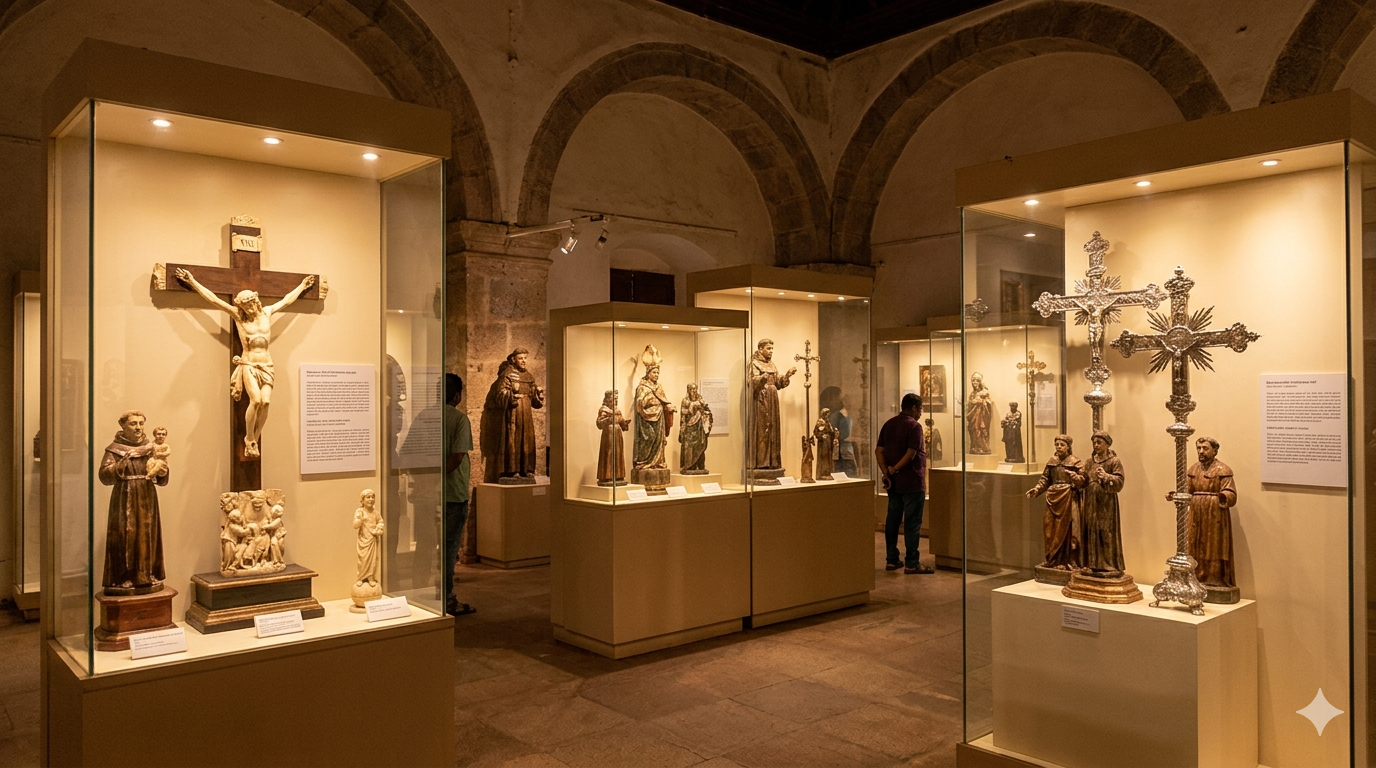
[IMAGE: Interior of Museum of Christian Art Goa — carved ivory crucifixes, silver processional crosses, wooden santos figures in glass cases, warm museum lighting] The Museum of Christian Art holds the finest collection of Indo-Portuguese religious art in the world — much of it created by Goan craftsmen who fused Catholic iconography with local artistic traditions.
Housed in the restored Convent of St Monica — the only convent for women established by the Portuguese in Asia — the Museum of Christian Art holds the most significant collection of Indo-Portuguese sacred art in the world. Over 200 objects span four centuries: carved ivory crucifixes, gilded wooden santos figures, silver processional crosses, embroidered vestments and painted altarpieces.
What makes the collection extraordinary is the evidence of cultural fusion in almost every object. Goan craftsmen trained by Portuguese missionaries created art that follows Catholic iconography but incorporates Hindu aesthetic sensibilities in the treatment of faces, the arrangement of figures, and the use of local materials. A crucifix carved in Goa in 1600 looks subtly but unmistakably different from one made in Lisbon at the same time — and understanding why is one of the more intellectually rewarding things you can do in Goa.
Entry fee: Nominal; well worth it. Allow 30–45 minutes.
After the Tour: Where to Eat and What to Do Next
By 11 AM you will have earned a proper Goan lunch. The options near Old Goa are limited but good:
- Viva Goa in Panaji (15 minutes by scooter) is one of the city's most reliable traditional restaurants for fish curry rice, prawn dishes and Goan vegetarian thali.
- The lunch homes in Panaji's old quarter (Fontainhas, covered in Day 9) are a 20-minute ride and provide a natural continuation of the morning's heritage theme.
- Several plantation restaurants in the Ponda area (covered in Day 4) are 20 minutes east and serve excellent buffet lunches in a garden setting.
For the afternoon, the Mangeshi and Shantadurga temples (Day 15) are 15 minutes from Old Goa and complete a comprehensive day of Goa's layered religious history — Hindu and Catholic side by side, which is itself one of the most remarkable things about this state.
Old Goa rewards those who slow down inside it. The buildings themselves are magnificent, but the real experience is the layered history they contain — of empire, conversion, artistic fusion, and the particular Goan identity that emerged from five centuries of cultural collision. No beach in Goa tells that story. These buildings do.


